Hairteach
- 3.0
- Rating
- 10.00K
- Installs
- Free
- Price

 Analysis by App-foxy
I approached Hairteach as a beauty-learning app rather than as a simple style gallery. Its promise is straightforward: help people learn from skilled hair professionals. That makes it potentially useful for someone who wants to understand techniques instead of merely copying a finished look. My experience also suggests that its value depends heavily on how comfortably you can follow visual instruction, move through the app, and adapt lessons to your own hair, tools, and surroundings.
Developed by AGT DIGITAL, Hairteach is free and aimed at Everyone. It belongs to the beauty category, and its current version is 3.2.5. The app has reached over ten thousand installs, while its average rating sits at 3.0 from roughly sixty ratings. Those figures give me a mixed but fair starting point: there is enough interest to make the concept worth exploring, yet the rating does not suggest that every user will find the experience equally smooth.
I would recommend trying it if you learn best by watching a professional demonstrate a process. I would be more cautious if you need detailed written instructions, strong customization, or a learning tool designed specifically around accessibility. Hairteach can be a useful companion for beauty practice, but it is not automatically a complete substitute for a salon lesson, a patient tutor, or a searchable video platform.
You May Also Like

 Pandora - Music & Podcasts
Pandora’s Music Is Easy to Start, but Harder to Recover
Pandora’s strength is its low-effort path from a seed to a station. Its weak spot is how much confidence it asks you to place in connection, setup, and quiet recovery.

 AccuWeather: Weather Radar
AccuWeather Review: A Quick, Clear Forecast for Everyday Decisions
For everyday plans, the best forecast is the one you can understand quickly. AccuWeather makes rain timing, radar, and local conditions easy to act on, with a few trade-offs.

 Hill Climb Racing
Why Hill Climb Racing Still Turns Crashes Into One More Run
A tiny car, a bumpy hill and one more upgrade: Hill Climb Racing keeps resurfacing because its simple chaos makes every near-miss feel personal.

 AliExpress - Shopping App
AliExpress Makes Global Shopping Feel Personal, but Shoppers Bear the Risk
AliExpress turns a global marketplace into a pocket-sized discovery engine. Its reach is useful, its shopping loop compelling, and its trade-offs easy to miss.

 Lords Mobile: Kingdom Wars
Lords Mobile Is a Kingdom-Building Routine, Not a Quick Match
A case-by-case verdict on the building, battles, device demands, and social commitments that make Lords Mobile rewarding for some players and exhausting for others.

 PDF Scanner app - TapScanner
TapScanner Makes Paperwork Easier to Capture, Check, and Share
TapScanner makes scanning with a phone feel less like a rescue operation and more like a dependable step in getting work done. Its capture tools are useful, though not flawless.
More From Our News Desk
View All News


How Hairteach works for different learners and situations
I’d look at Hairteach through the practical question of who can learn comfortably from a hair-focused visual lesson. In my view, the best way to judge it is to try a short demonstration with your own device setup, then notice whether you can follow the sequence without rushing. That small trial helps separate a useful learning aid from a format that may not suit your needs.
Readability and navigation shape the learning experience
The most important question for a teaching app is not simply whether it contains attractive hair content. It is whether I can find the right lesson, understand what is happening, and return to a technique without unnecessary effort. Hairteach’s focused subject is a strength here. Because the app is built around hair education, I am not starting in a general-purpose beauty platform filled with unrelated makeup, skincare, or shopping material.
That narrower purpose can make the app feel less distracting for a learner who already knows what they want to improve. Someone preparing for a special occasion might open it looking for a styling idea, while a beginner could use it to observe how a professional approaches sections, shaping, finishing, or tool handling. The difference is that a beginner may need more context before a demonstration becomes genuinely teachable.
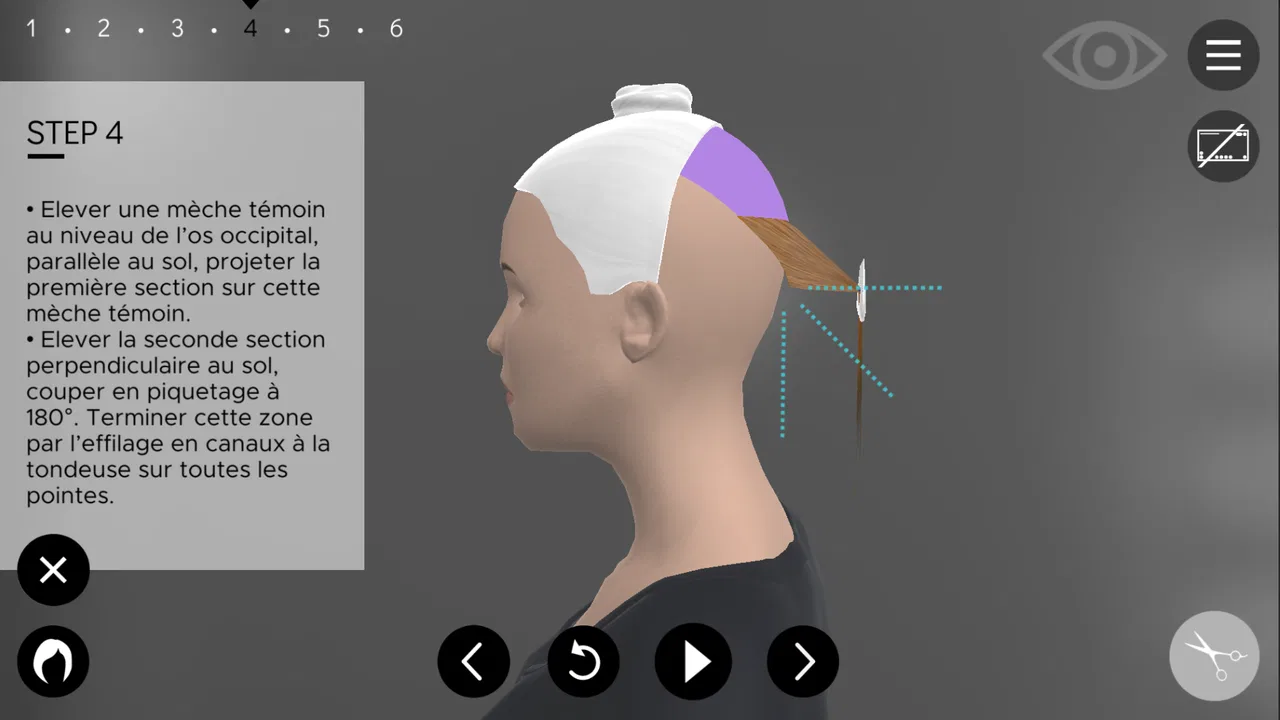
I found that visual learning requires active reading even when the lesson is presented through images or video. I would pause frequently, check the position of the hair, and compare the demonstrator’s hand placement with my own. That is useful because it turns passive watching into practice, but it also means the app may feel less accessible to people who need every step written in plain language.
For users with low vision, readability is not only about whether text looks large enough. It also concerns contrast, labels, spacing, and whether important controls are easy to distinguish from decorative content. I would not assume that a visually rich beauty app automatically handles those needs well. Before committing to a long learning session, I would test whether headings, buttons, thumbnails, and instructional details remain comfortable at the device’s preferred text and display settings.
A practical approach is to use Hairteach in short passes. First, browse a lesson to understand its overall goal. Next, watch only the opening technique. Then stop and recreate that part before continuing. This reduces the need to remember a complete sequence and makes it easier to notice where a style becomes difficult. It is also a useful workaround when navigation feels less efficient than a dedicated video service.
The app’s compact focus may suit people who dislike endless search results. On the other hand, a general video platform usually offers more ways to search by hair type, length, tool, difficulty, or creator. Hairteach is more appealing when I want a beauty-specific learning environment; the broader alternative is better when I need highly precise filtering or several explanations of the same technique.
Motor and sensory needs deserve realistic expectations
Hair education is unusually demanding from a motor perspective. The learner may need to hold a phone, separate sections of hair, manage a brush or comb, and maintain a mirror view at the same time. Even a clear lesson becomes difficult if the device is constantly out of reach. I would place the phone on a stable surface or use a stand before beginning, rather than trying to hold it while styling.
This setup matters especially for people with limited hand strength, tremors, joint pain, or one-handed use. A hands-free position can reduce repeated reaching, but it does not solve every problem. Hairteach can show a technique; it cannot physically adapt the movement to a user’s range of motion. I would treat each lesson as a sequence of ideas to modify, not as a demand to reproduce the professional’s exact speed or posture.
For users who are sensitive to motion, rapid transitions, bright imagery, or busy screens, the safest workflow is to preview a lesson briefly and adjust the phone’s display settings before continuing. Lower brightness, a comfortable viewing distance, and frequent breaks can make a difference during close-up demonstrations. These are general device adjustments rather than special Hairteach functions, but they directly affect whether the content is usable in practice.
People who are deaf or hard of hearing may also need to judge how much information is communicated visually and how much depends on audio. A demonstration that shows hand movement clearly can remain useful without sound, while spoken explanations become harder to follow if equivalent on-screen text is not available. I would not rely on audio-only guidance for an important style. When possible, I would watch the visual sequence first and use captions or written notes from my own observations.
A helpful technique is to create a personal step card while watching. I might write down the sectioning order, the tool used, and the point at which the style is secured. This takes extra time, but it creates an accessible reference that is easier to consult than repeatedly replaying a lesson. It also helps users whose attention, memory, or processing speed makes long demonstrations difficult to retain in one sitting.
There is a trade-off here. A polished demonstration can show texture, direction, and movement better than a paragraph can, especially for learners who think visually. Yet visual teaching can leave gaps for someone who needs exact verbal sequencing. Hairteach is strongest when the user can combine observation with hands-on experimentation, and weaker when the user needs a fully narrated, text-first course.
Situational access changes what the app is worth
The most realistic use case I can imagine is getting ready at home before an event. I would watch a lesson earlier in the day, identify the tools it appears to require, and practice one section before attempting the complete style. That preparation is important because a phone screen beside a mirror is not the same as a classroom. Lighting, available space, hair length, and time pressure can all change the result.
Hairteach may also help someone who cannot easily attend an in-person beauty workshop. A learner can study at a convenient time and revisit an idea without feeling rushed by a teacher or group. That flexibility is valuable for people with irregular schedules, caregiving responsibilities, social anxiety, or transportation difficulties. It can also suit users who prefer private practice before showing their work to anyone else.
At the same time, learning at home creates its own barriers. The person may not own the same tools shown in a lesson, may have a different hair texture, or may be working in a cramped bathroom with poor lighting. I would avoid treating a demonstration as a universal recipe. Instead, I would ask which part of the result depends on the technique and which part depends on the model’s hair, products, or professional experience.
The app could be useful for a parent helping a child prepare for a performance, for a student building confidence with basic styling, or for a hobbyist collecting ideas before visiting a salon. In each case, I would use it as preparation rather than as a guarantee. A professional’s result may rely on subtle tension, timing, and practice that are difficult to see on a small screen.
For salon professionals or advanced learners, the value is different. Hairteach may provide inspiration or a way to revisit familiar approaches, but an experienced stylist will probably want deeper technical detail, structured progression, and content organized by professional goals. A specialist training platform or in-person education may be a better investment for someone who needs certification-oriented learning or precise theory.
Its free price makes experimentation easier. I can explore the app without first deciding that it deserves a paid subscription, which is helpful for users on a tight budget. Still, free access does not remove the cost of tools, products, time, or failed attempts. I would start with a technique that uses equipment I already own instead of buying supplies for a style I have not yet tested.
Remaining barriers become clearer during real practice
The app’s average rating of 3.0 indicates that the experience is not universally convincing, and I think that matters for expectations. A focused concept can still be held back by presentation, lesson depth, navigation friction, or differences between what a learner wants and what the app emphasizes. I would approach it as something to sample, not as the only beauty resource I need.
One barrier is the gap between seeing a technique and understanding why it works. If a lesson moves quickly over preparation, tension, product choice, or finishing, a beginner may copy the visible motions without knowing how to correct a mistake. My workaround would be to pause after each major action and ask what changed: the direction, the volume, the hold, or the shape. That turns the lesson into a small investigation rather than a sequence to imitate blindly.
Another barrier is variation in hair. A style demonstrated on one texture or length may behave very differently on another. Hairteach can introduce an approach, but I would not assume that the same timing or section size will suit everyone. Users should be prepared to make smaller sections, change the order, or stop when the hair begins to pull uncomfortably. Comfort is a practical limit, not a failure to follow instructions.
Device use can also be inconvenient. A screen may lock, become difficult to see near a mirror, or collect product and water if it is placed too close to the styling area. I would keep the phone outside the splash zone and review the next step before picking up tools. This simple habit reduces interruptions and is particularly helpful for users who need more time between instructions.
People who rely on assistive technologies should test the app with their normal setup before planning a complicated session. Screen reading, magnification, voice control, switch access, and display adjustments can behave differently across apps. I would not promise that every part of Hairteach will work equally well with every accessibility setting. The sensible decision is to check whether the controls and instructional content remain usable during a short trial.
There is also a social barrier that is easy to overlook. Beauty tutorials can make a learner feel that a result must look perfect immediately. I found it more productive to use Hairteach for one skill at a time: clean sectioning, controlled brushing, a secure hold, or a simple finish. This keeps the experience encouraging for people with limited dexterity or slower learning speed and makes progress easier to recognize.
Compared with a salon appointment, Hairteach is more private and repeatable but lacks live correction. Compared with a general video platform, it is more focused but may offer fewer ways to compare competing methods. Compared with a written guide, it can communicate movement more naturally but may demand more visual attention. Those trade-offs explain who should choose it: learners who want demonstrations and independent practice, rather than users seeking comprehensive coaching in one format.
My inclusive verdict on the learning experience
I see Hairteach as a modest, approachable beauty app with a useful central idea. AGT DIGITAL has positioned it for people who want to learn from hair experts, and the free entry point makes it reasonable to test. Its Everyone age rating also makes the subject matter broadly approachable, though suitability still depends on the learner’s needs, confidence, and ability to adapt techniques safely.
My strongest recommendation is to use it deliberately. Set up the phone before styling, preview a lesson, write down the key sequence, and practice one movement at a time. Users with vision, hearing, motor, attention, or sensory considerations should adjust the surrounding setup and judge the app by a short hands-on trial. The lesson is only useful if the learner can pause, understand, and reproduce enough of it comfortably.
I would choose Hairteach for visual inspiration, private practice, and a focused introduction to hair styling. I would skip it as my primary resource if I needed detailed written alternatives, live feedback, professional qualification training, or highly specific filtering by hair characteristics. In those cases, a specialist course, a patient stylist, or a broader tutorial service may fit better.
Overall, I find the app worth exploring, but not worth treating as a complete answer to inclusive beauty education. Its real strength is giving visual learners a starting point; its real limitation is that the learner must do much of the adapting. If you are willing to slow demonstrations down, make your own notes, and work within your body’s comfort, Hairteach can become a practical part of a personal styling routine rather than just another source of attractive ideas.
After using it, my advice to a friend would be simple: try one lesson with tools you already have and enough time to repeat the steps. If the visual approach clicks, keep it as a reference for future practice. If you need more explanation or direct correction, move to a resource built around those needs instead of forcing this app to serve a purpose it was not designed to cover.
FAQs for Hairteach
01What is Hairteach, and who is it designed for?
Hairteach is an educational app focused on hairdressing, hairstyling, and beauty-related learning. It may be useful for beginners, beauty students, professional stylists, salon owners, or anyone interested in improving their understanding of hair techniques. Before downloading, users should review the app’s current course catalog and teaching approach to confirm that the available lessons match their experience level and personal learning goals.
02What type of lessons and hairdressing content does Hairteach include?
The app is intended to provide learning material related to hairstyling, hair care, cutting, coloring, and other salon techniques, depending on the available program or subscription. Content can vary by version, region, and membership plan, so it is worth checking the course descriptions before signing up. Users should also confirm whether lessons are presented as videos, written guides, demonstrations, or a combination of formats.
03Is Hairteach suitable for complete beginners with no salon experience?
Hairteach can be helpful for beginners if its available lessons include basic terminology, tool guidance, hygiene practices, and step-by-step demonstrations. However, users should not assume that every course starts from an introductory level. Some material may be aimed at experienced stylists. Beginners should examine the lesson descriptions, difficulty labels, and sample content before downloading or purchasing access, especially if they want structured professional training.
04Does Hairteach require a subscription or include in-app purchases?
Access to educational apps such as Hairteach may depend on a free trial, recurring subscription, individual course payments, or premium in-app purchases. The exact pricing and included features can change over time and may differ between Android and iOS. Before confirming payment, carefully read the subscription terms, renewal conditions, cancellation instructions, and refund policy shown in the relevant app store.
05Can Hairteach replace professional hairdressing school or hands-on training?
Hairteach may be a convenient learning supplement, but it should not automatically be considered a replacement for supervised, practical training. Hairdressing requires hands-on practice, proper tool handling, client consultation skills, sanitation knowledge, and feedback from an experienced professional. The app can help users study techniques and concepts, but important services such as chemical treatments or advanced cutting should be practiced responsibly and, when possible, under qualified supervision.
Pros
- Clear lessons make hairstyling techniques easier to follow.
- Useful for beginners seeking structured hairdressing practice.
- Covers practical skills that can be revisited when needed.
- Can support learning outside a traditional classroom setting.
- Helpful reference for improving confidence with hair techniques.
Cons
- Some lessons may require tools or products not included with the app.
- Advanced users may find parts of the content too basic.
- Learning quality depends on the clarity of each individual lesson.
- A stable internet connection may be needed for some content.
- The app may not replace supervised
- hands-on professional training.

Hairteach
Gallery